
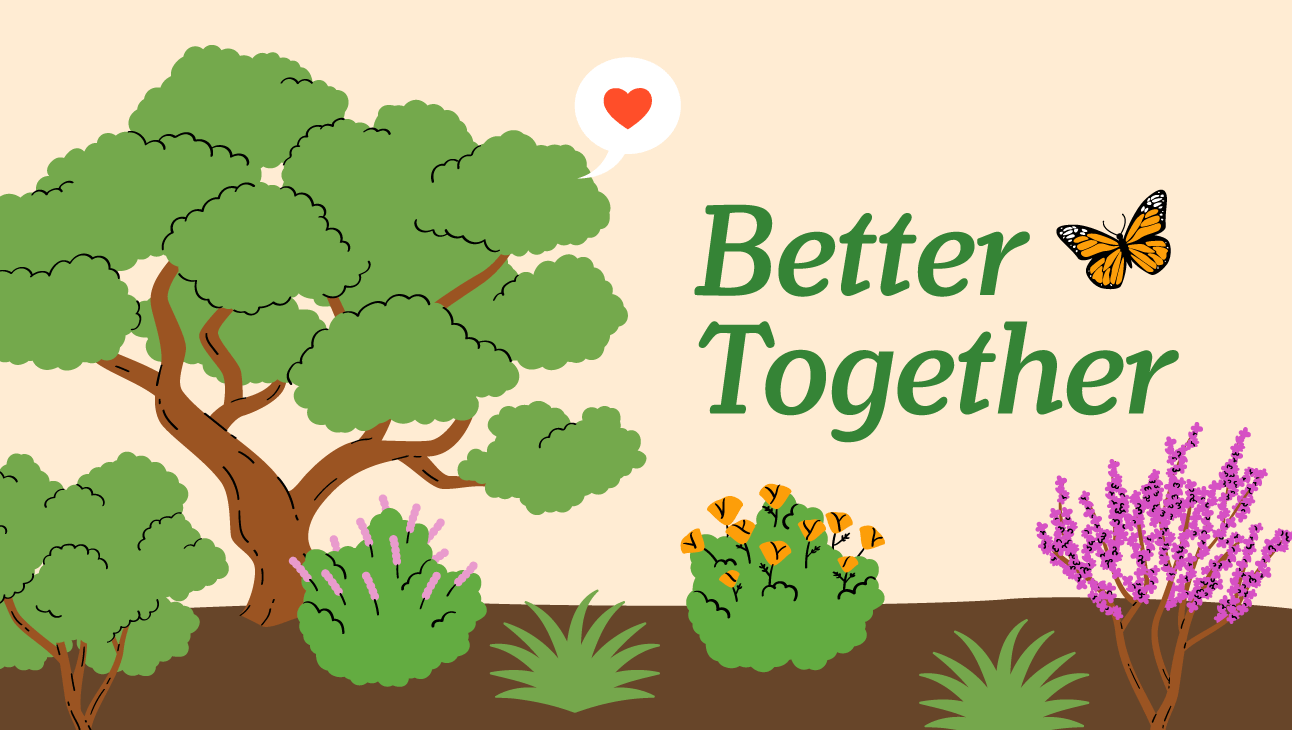
Just like people, plants work better together. They thrive in ecosystems, and benefit from having a diverse array of other plants nearby that they’ve evolved to grow in harmony with.
That’s why when you’re restoring an ecosystem or planting a native garden, it’s a good idea to consider companion planting—the practice of growing plants near each other that protect and support each others’ growth.
When you grow plants from the same plant community in close proximity, they can benefit each other and the overall ecology in a variety of ways.
For instance, a plant that grows quickly in full sun might act as a “nurse plant,” providing cover to a nearby one that needs shade when young.
Plants that make the same mycorrhizal connections often share resources, signal when defenses are needed, and improve the soil to the benefit of their overall community and to the detriment of invasive weeds.
Diversity of species in the landscape also means there will be more modes of deterring pests, attracting pollinators, and improving soil health.
Restoration generally involves planting dense, diverse stands of plants. When they come from the same plant community they tend to cooperate and ensure the entire community is more resilient. When you garden with the ecology in mind, you can help the plants help each other!
Want to try companion planting in your native garden? Here are some tips:
- Consider gardening with plants that grow together naturally in the wild! Although intermixed plants from different habitats can grow together, they do best within the specific ecosystem and conditions they evolved for.
- Take a walk at your local nature preserve to help spark inspiration. Pay attention to the subtle differences between oak woodland, chaparral, coastal sage scrub, and riparian areas and learn what grows in each.
- Check out Calscape to learn more about which species are compatible with each other!