
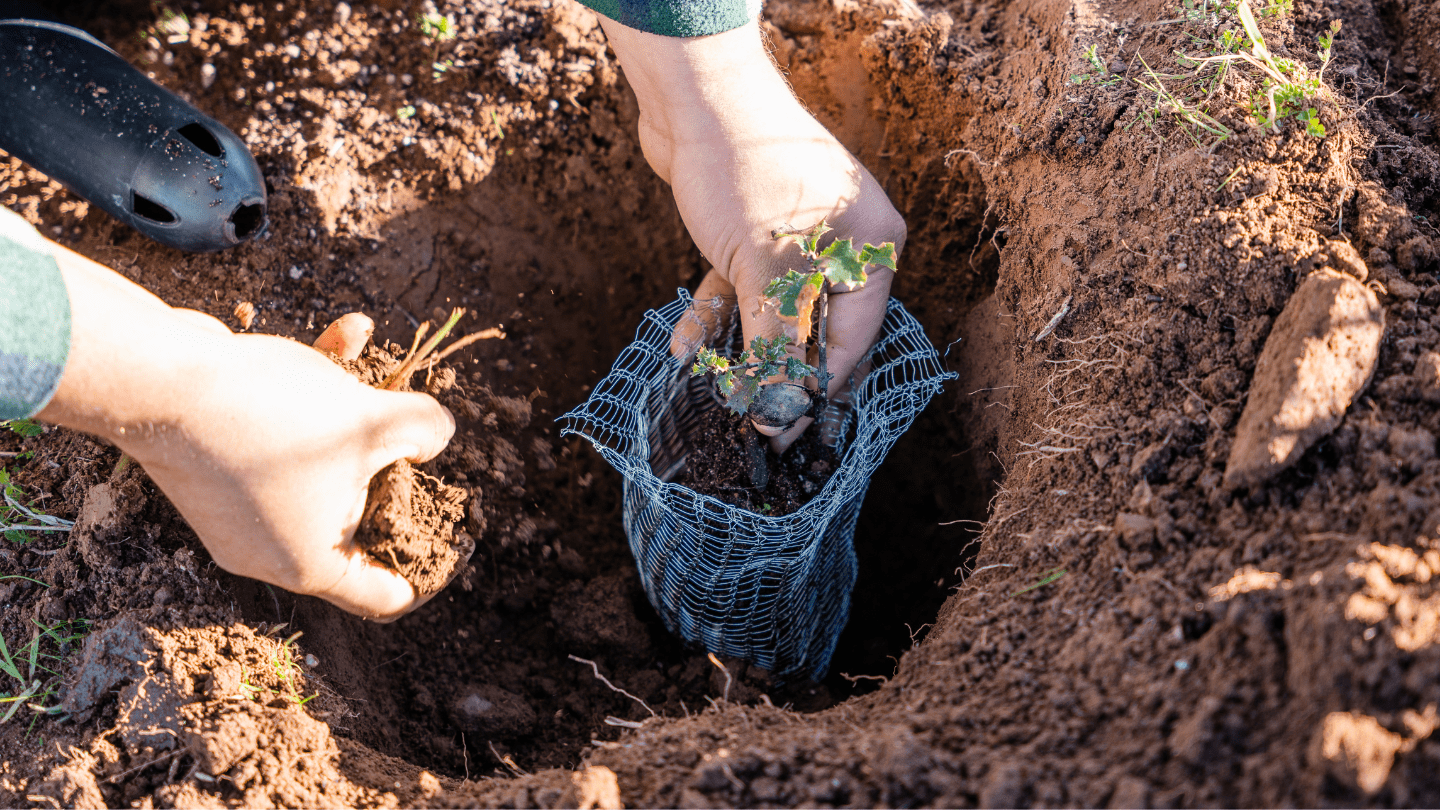
In January 2025, the Hughes Fire scorched through over 10,000 acres near Castaic Lake in Los Angeles County. It moved fast, pushed by high winds. Thanks to a rapid response from local fire crews, it was contained just as quickly—but not before it tore through 25 acres of land where TreePeople had been working for years to restore native chaparral and oak woodlands.
“We’d been working on the site since 2021, planting thousands of oak seedlings,” says Alyssa Walker, Associate Director of Conservation. “When the fire came through, everything burned. But what happened next surprised even us.”

Letting The Land Heal
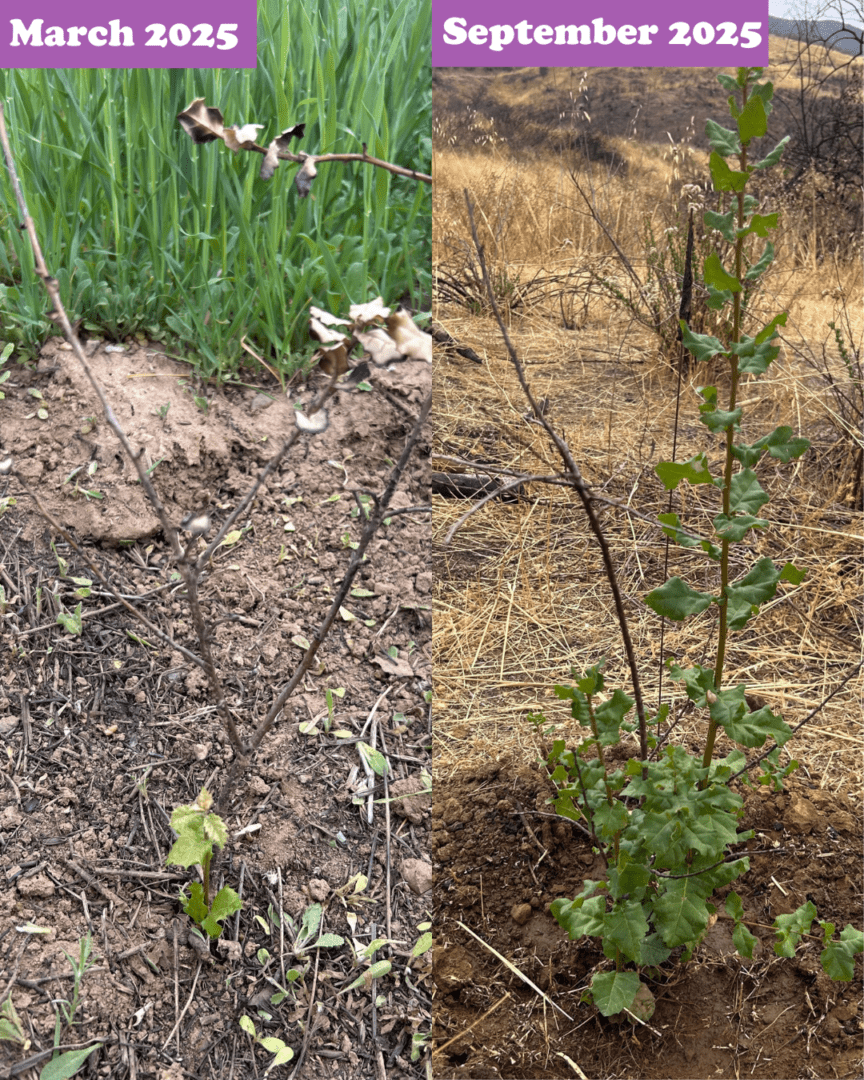
The land, though charred in the days after the fire, wasn’t down for long. Within just two months, our Conservation team began to see signs of plantings resprouting.
“One year later, over 1,400 oak seedlings had not only resprouted—they had surpassed the heights we observed before the fire,” says Walker. “It’s the kind of recovery that gives us hope.”
Most of the trees were coast live oak (Quercus agrifolia) and scrub oak (Quercus berberidifolia), species well-adapted to fire. Some interior and canyon live oaks were present too. Thanks to the groundwork laid by our Conservation team and the resilience of these native trees, the land is on a promising path to recovery.
Without the work we had done in the area, that land, having been previously disturbed by a fire in 2002, would be battling more post-fire invasive species encroachment, and there would not be oak tree seedlings present to re-sprout.
Additionally, areas where native chaparral and coastal sage scrub plant communities were already present are bouncing back with strength. Chamise, sage, yerba santa, goldenbush, and buckwheat are resprouting, from beneath the charred soil. These are the signs of a landscape recovering the way nature intended.
A Long and Resilient Journey Ahead
TreePeople’s post-fire restoration work in this area of The Angeles National Forest is part of a long-term effort funded through partners like Re:Wild, CAL FIRE, National Forest Foundation, National Fish and Wildlife Foundation and our own Wildfire Resilience Fund. The focus: restoring ecosystem function in areas impacted by fire or years of ecological degradation—especially those near the wildland-urban interface, where people and nature meet.
“Fire is a natural part of California’s landscape,” says Walker. “What we’re seeing now is that many places don’t have the resilience they used to, often due to repeated burns or invasive species taking over.”
That’s where TreePeople steps in. By planting native species, removing invasives, and stewarding the land over many years, we help natural areas regain the strength to recover on their own after fire.
The work near Castaic Lake will continue through at least 2029, and likely beyond. “We go into these projects knowing they may burn again,” says Walker. “In fact, that’s why we do them. So that when fire comes, the land is ready.”
A Note to Hikers and Nature-Lovers:
To anyone who has walked through a beloved canyon trail and felt the heartbreak after learning wildfires scorched the land, we understand. In the wake of disaster, people often want to know how they can help. The best thing you can do to help these burn scars is to avoid visiting them and let nature begin to heal on its own. Guerilla planting and restoration can disturb the environment when the land needs time to recover on its own.
Hiking or other recreational activities in these burn scars should also be avoided.
“Give it time. The land is more resilient than it looks, but it’s also vulnerable in the first few years after a fire. That’s why we encourage people to volunteer through organized restoration events rather than hiking off-trail or exploring burned areas too soon,” says Walker.
Want to help? How You Can Help:
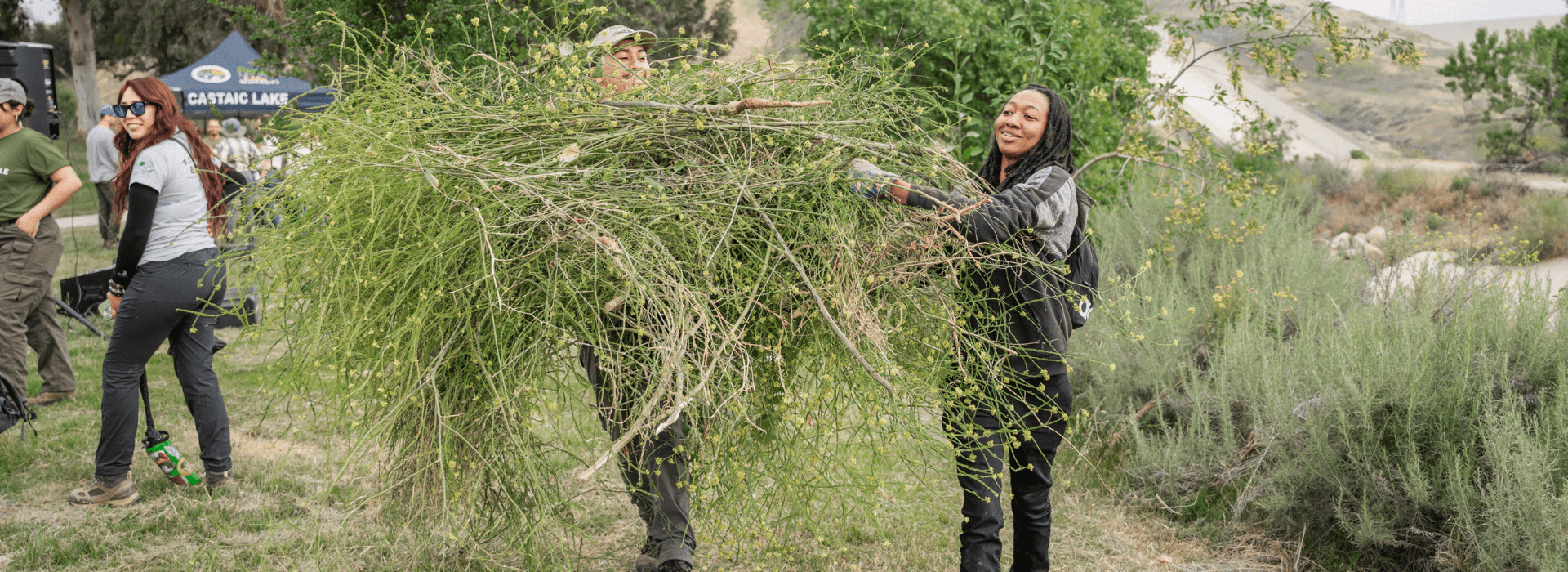
TreePeople regularly hosts volunteer restoration events. Support the recovery by joining a restoration event or donating to TreePeople’s wildfire resilience work.
Learn more and get involved at treepeople.org.