
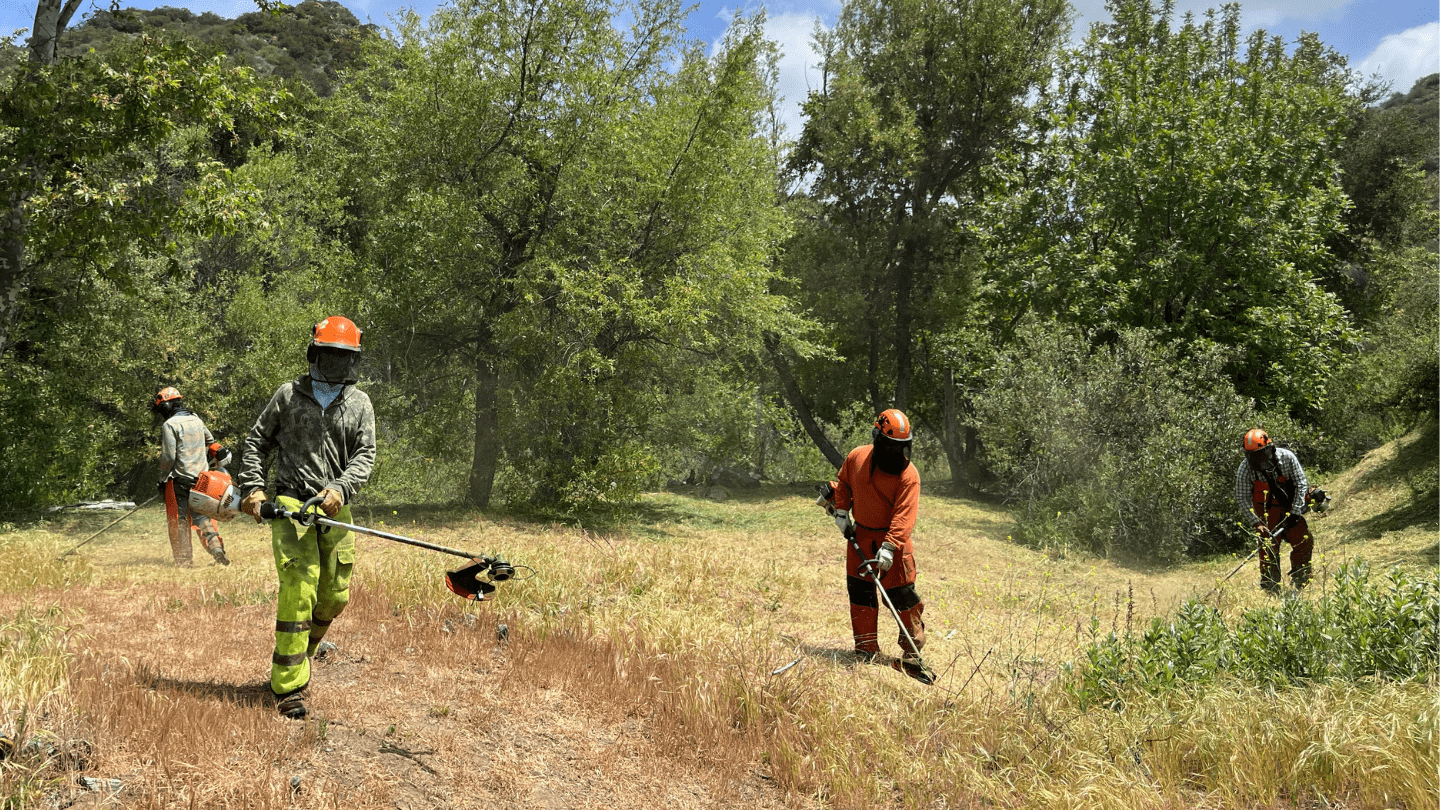
Wildfires are a natural part of California’s landscape and ecology. Unfortunately, human activity sparks fires more often than the landscape is adapted for, and the spread of invasive species and climate change have caused fires to happen more often, spread faster, and become far more destructive in recent decades.
To get ready for our increasingly intense fire seasons here in SoCal, we spend months prepping the boundaries of our wilderness areas at our TreePeople Land Trust. By reducing fuel loads, we hope to slow the spread of fires to protect the surrounding neighborhoods and ecosystems.
Here’s how we do it:
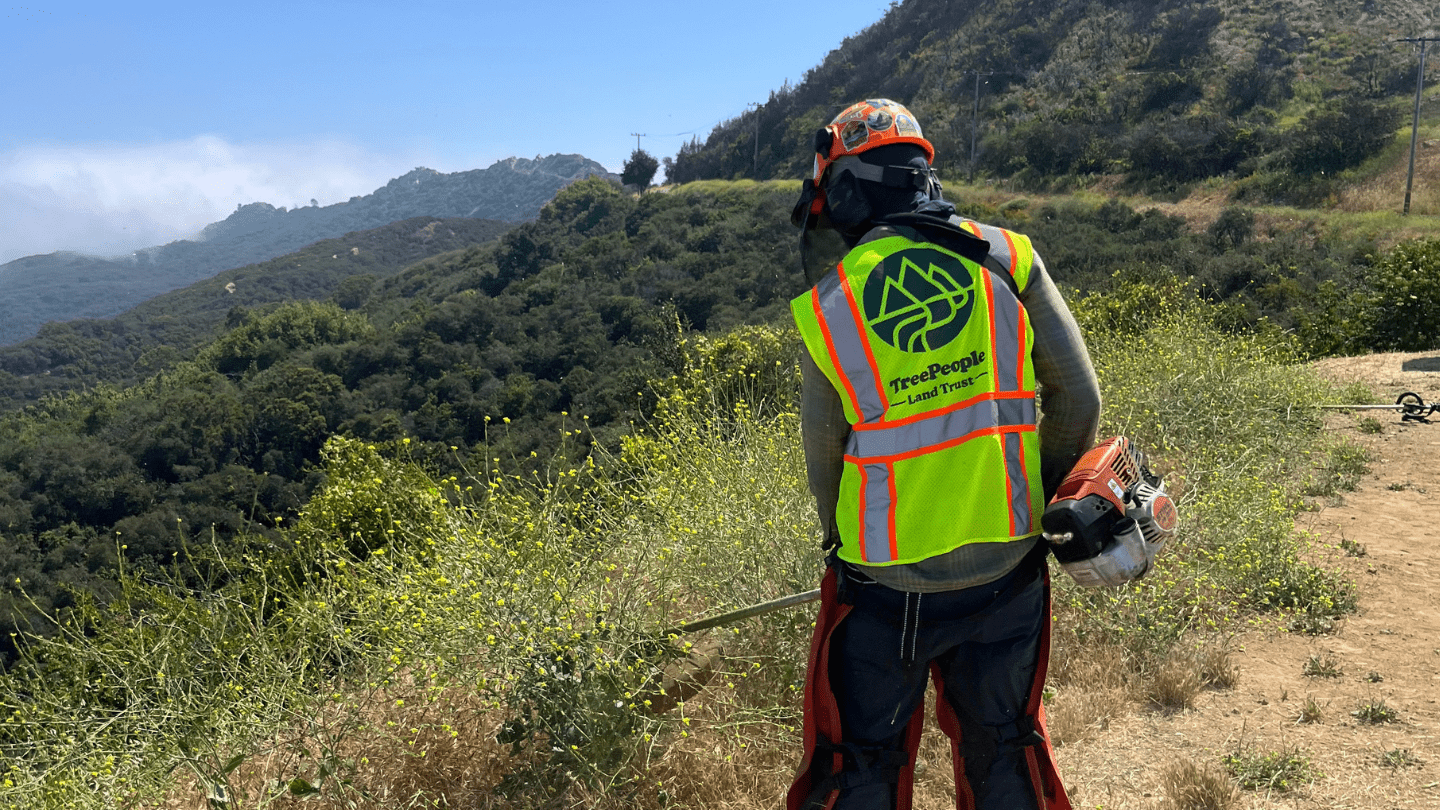
Weed-whipping annual invasives
How it works: We remove invasive annual weeds & grasses using string trimmers (aka weed whips) which chop and mulch plant debris into a fine ground layer less than 3” high.
Why it’s important: It destroys vegetation like invasive grasses and mustards that can dry out and rapidly ignite. If done early and often enough, this method can also potentially weaken and destroy weeds before they spread seed to the soil.
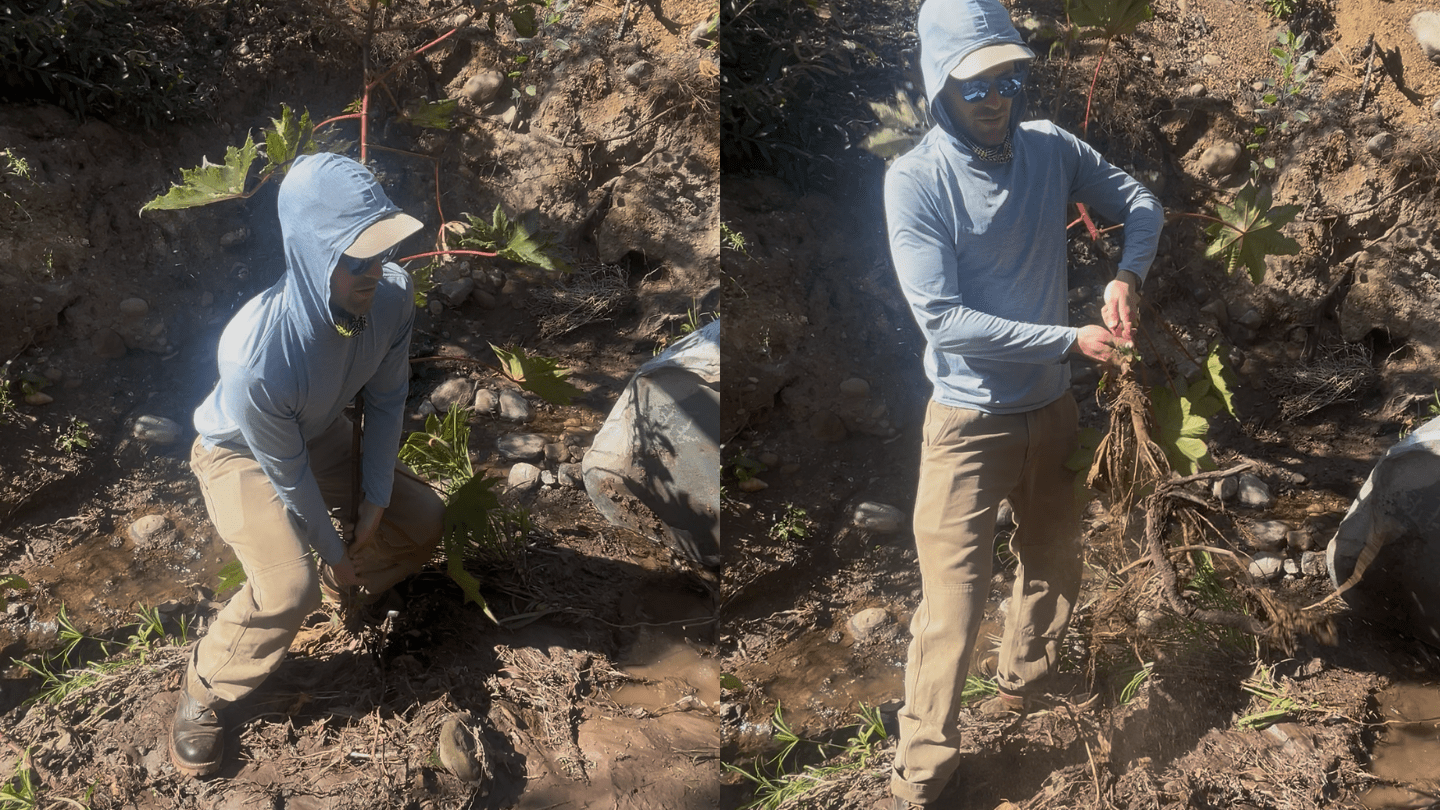
Removing perennial / woody invasives
How it works: We remove invasive species like tree tobacco, castor bean, and Spanish broom that grow perennially as shrubs or trees and do not die off seasonally.
Why it’s important: These types of invasive plants pose a fire risk due to their high flammability and height, as well as their ability to spread rapidly and crowd out more fire-resistant native plants.
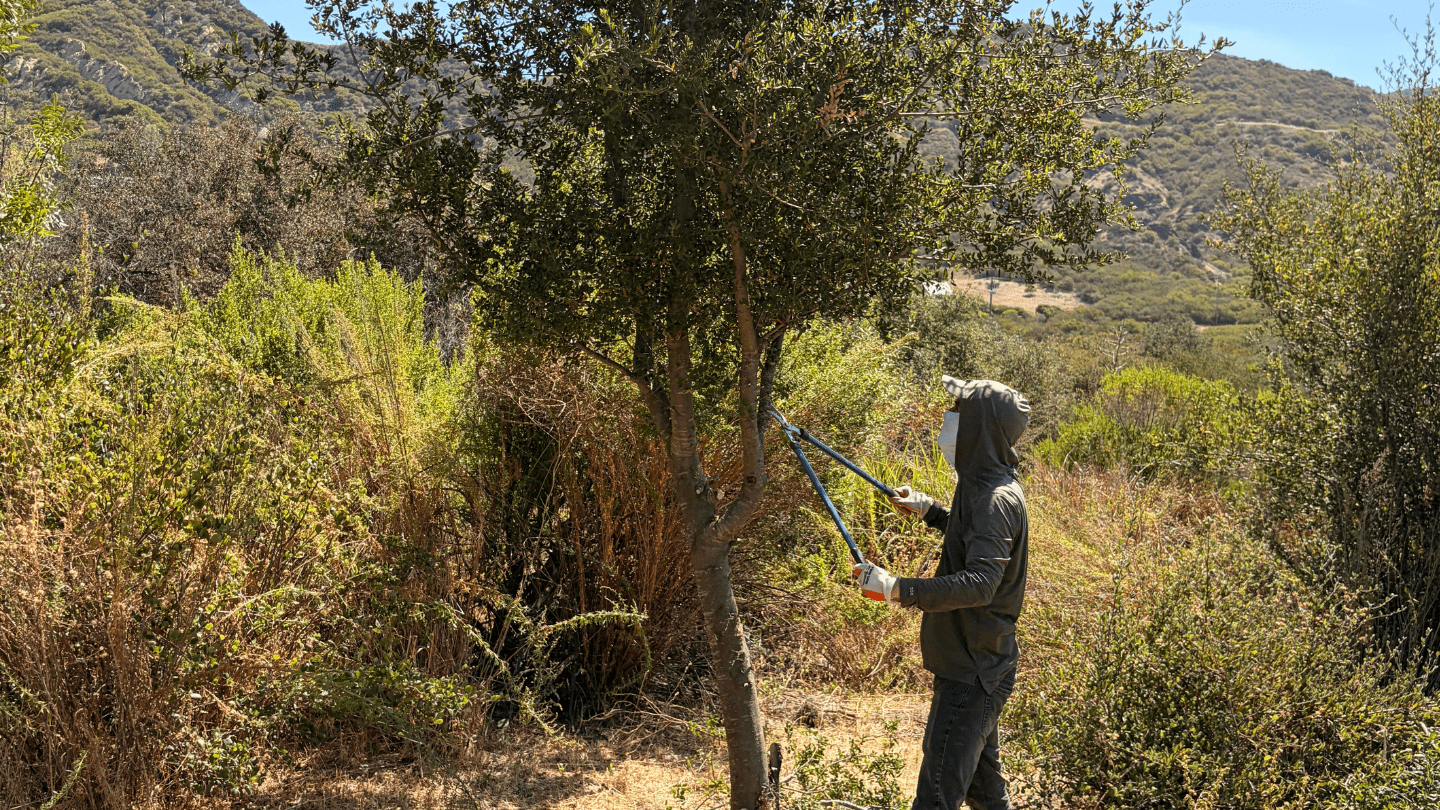
Lifting/pruning native shrubs & trees
How it works: We remove (or “lift”) all lower branches on trees and large shrubs below 6’, and prune excess growth from small & medium-sized shrubs.
Why it’s important: Lifting reduces the potential for fire ladders to occur, preventing a wildfire from spreading upward to the canopy of a tree. Pruning of smaller native shrubs creates space between vegetation which reduces risk of wildfire spread, while allowing native shrubs to continue providing ecological benefits and stabilizing soil on steep slopes.
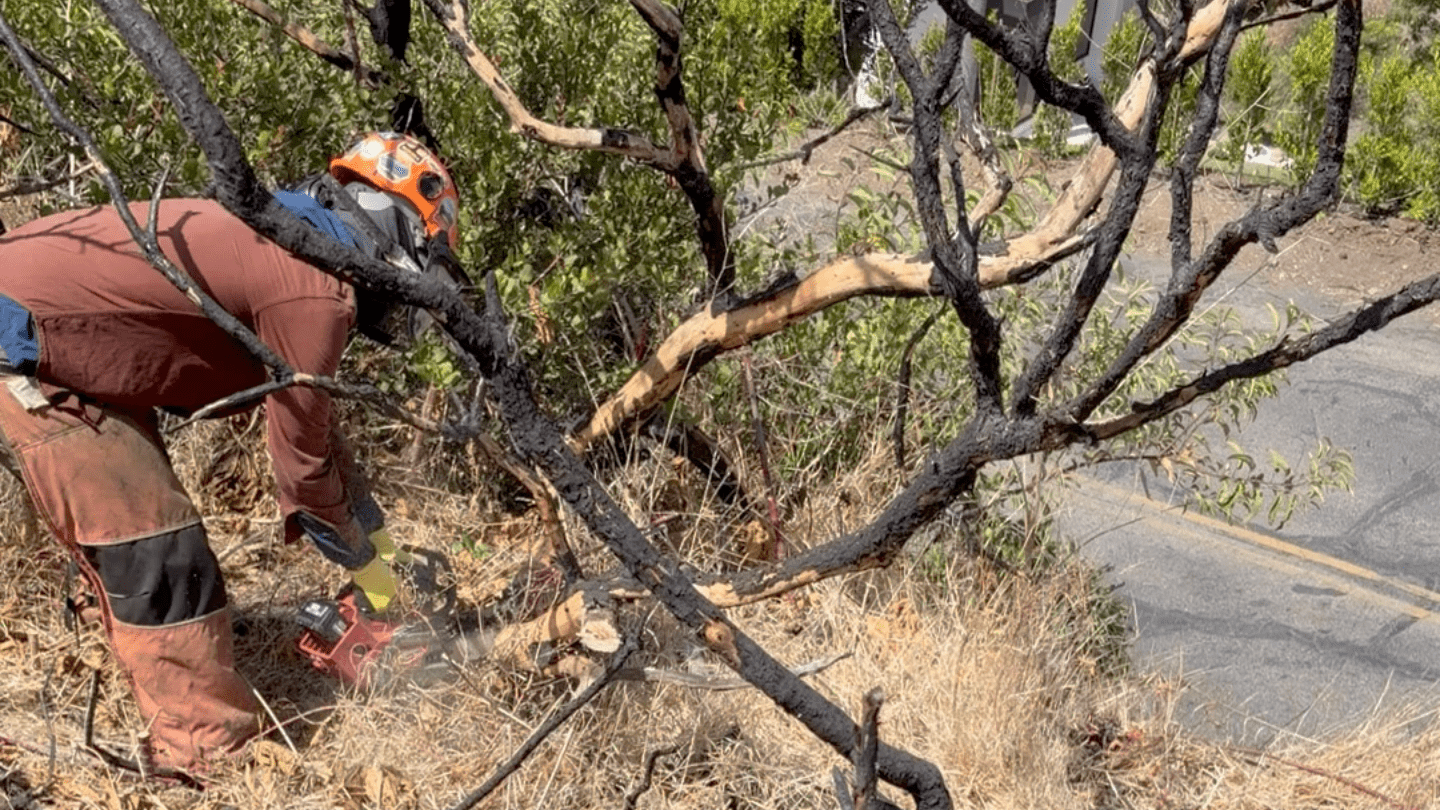
Removal of burnt and/or dead standing vegetation
How it works: We remove all woody vegetation that has either fully died or burnt in a previous fire, typically using a chainsaw.
Why it’s important: All fully dead vegetation, whether native or invasive, will fuel a fire’s spread due to being dry and highly flammable. Removal is therefore necessary to prevent undermining other fuel modification efforts.
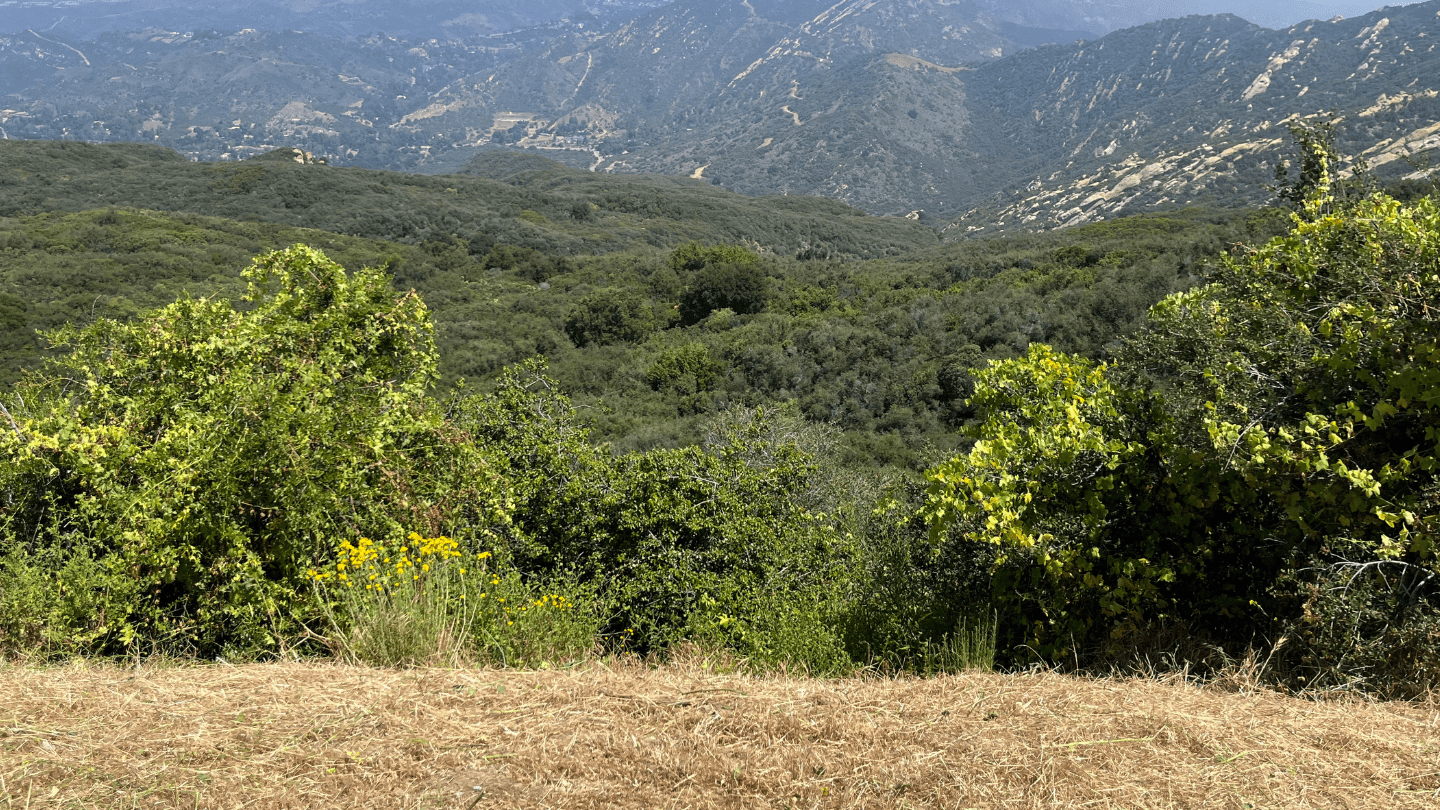
These efforts combined help us to both create breaks in wildfire behavior and to make sure there’s room for firefighters to engage with an encroaching fire.
Fuel modification in wildland areas is a significant, important piece of the puzzle in preventing wildfire damage. However, it cannot be successful without property owners doing the same work on the area directly surrounding and touching their homes!
To learn more about how you can create defensible space around your home, head to defensiblespace.org.
To support our wildfire restoration and prevention efforts, donate to our Wildfire Resilience Fund today.